CAC features
What a CAC gets in Collaborate
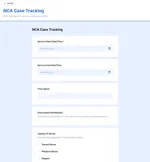
A CAC program starts with 15 forms built around the MDT model. Your team changes any of them in a drag-and-drop form builder, with conditional logic and scoring.
One case, every person in it
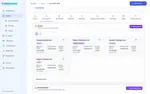
- Victim, caregiver, alleged perpetrator, witness and head of household on one case, each with their own intake.
- Partner agencies and contacts can join the case too.
- A person has one record across every case. A merge wizard cleans up duplicates.
- Demographics are captured once and shared by every form.
- An alert banner flags a safety concern on the case for everyone who opens it.
The MDT's work, recorded
- MDT case coordination. Which agencies are involved (law enforcement, child protective services, prosecution, medical, mental health, victim advocacy), joint investigations and case review meetings.
- Forensic interview. Whether it happened, where, whether it was recorded, disclosure and interpreter use.
- Medical exam record, mental health tracking and criminal-justice outcomes.
- Assessment, service plan, follow-up and discharge summary.
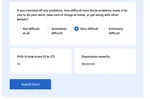
- Scored screening forms such as PHQ-9, GAD-7, PCL-5 and the ASQ suicide risk screen.
“Our therapy team struggled to use our database because it wasn't a HIPAA-compliant database at that time. Our therapists were using one set of documents, our medical team was using another set of documents. Collaborate allowed us to bring everybody into one combined health record that worked for everybody.”
 Kelli MukaddamData Specialist / Handle With Care Coordinator, National Children's Advocacy Center
Referrals in and out
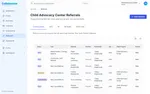
- Referral types configured for your center, such as New Case Referral, Community / Self Referral, and Mental Health / Therapy Referral.
- Partner agencies can send a referral through a public link, no login needed.
- Each referral moves through review, waitlist, accept or decline. Accepting it creates the case.
- Share selected form submissions and documents from a case with a partner as a live, read-only view you can revoke, with every access audited.
Outreach, groups and prevention
- Record events, groups and presentations with attendee rosters.
- Each registered participant gets their own pre- and post-survey link.
“Being able to document everything we do for kids and families, along with additional need to serve the underserved, were the keys for us.”
 Jennifer PuthoffProgram Manager, Santa Clara County Children's Advocacy Center
Families and staff
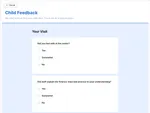
- A client portal where caregivers complete assigned forms, see released documents and give consent, in English or Spanish.
- Tasks, case notes, and document templates that merge case data into PDFs.
- Roles and access set per program, so staff see what their work needs.
- Forensic interview video goes to forenzo.io from the case, at $19 per interview for Collaborate customers, and never passes through Collaborate.
Reporting
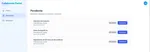
VOCA and NCA fields are built in, and the Funder Compliance tab shows anything missing. Ask the reporting agent for your VOCA, VAWA, SASP, NCA, HMIS, IFSATS or TANF report in chat.
See it configured for your programs.
We'll walk through a CAC program with your own forms in mind.